Preparing your skin for a wedding does not require making it flawless or starting an elaborate new routine. The more useful goal is comfortable skin and a makeup combination you have tested. Travel, disrupted sleep and unfamiliar products can make planning less predictable, so give yourself time to learn what suits you. If you have a persistent skin condition or a history of reactions, a qualified clinician should guide treatment decisions.
Start with what your skin already tolerates
List the cleanser, moisturiser, sunscreen and any prescribed treatment you currently use. Note which products feel comfortable and which leave your skin tight, itchy or irritated. Bring that list to a professional appointment if you need advice. A wedding deadline is not a reason to stop prescribed treatment or add several active ingredients without discussing it.
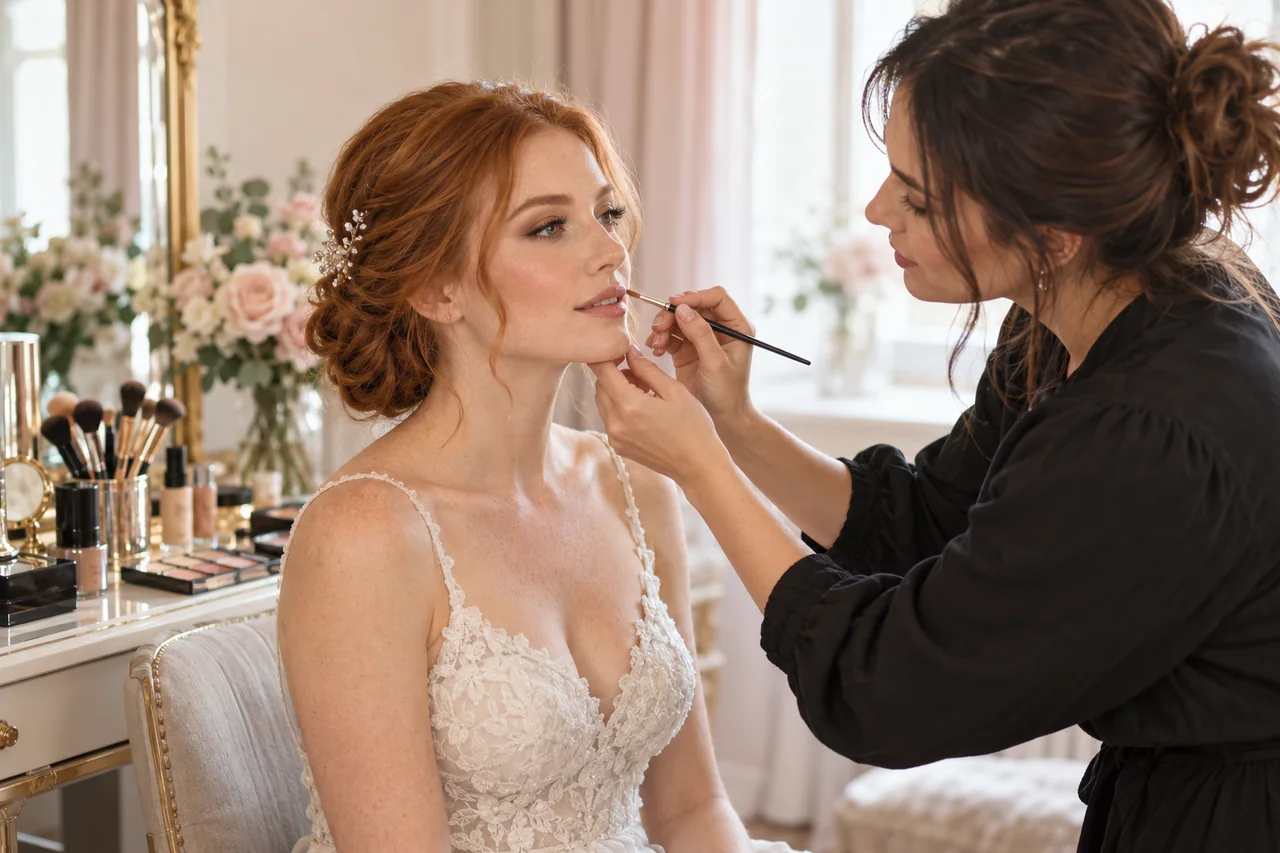
Build the makeup trial around your familiar routine where possible. Tell the artist what you applied that morning and how long before the appointment. If makeup pills, separates or feels uncomfortable, those details help explain the result. One trial cannot diagnose a skin concern, but it can reveal a practical mismatch between preparation and cosmetics.
Do not confuse visible pores, freckles or fine lines with a problem requiring treatment. Those features may remain visible in a successful bridal look. Decide which cosmetic effect you actually want, such as a little more coverage around redness, rather than describing normal skin texture as something that must disappear.
Introduce products with enough time to observe them
The American Academy of Dermatology’s product-testing advice describes trying a skincare product on a small area twice daily for seven to ten days, using it as directed. This is a precaution, not a guarantee against a later reaction or a replacement for medical allergy testing.
If a product causes a reaction, stop using it and seek appropriate advice, especially if symptoms are severe or persistent. Do not keep applying it because the wedding is close or because a review described the result as a normal part of getting better skin. Your tolerance matters more than the popularity of a routine.
Introduce one change at a time when possible, so you can identify what made the difference. A newly purchased cleanser, serum, mask and primer used together create several possible explanations for irritation. Keep simple notes on dates and products. They are more useful than trying to reconstruct the sequence after a reaction.
Give procedures their own professional timeline
If you are considering a peel, laser treatment, injectable treatment or other procedure, speak to the relevant qualified practitioner early. Ask about suitability, expected recovery, possible complications and follow-up. Recovery varies, and a general wedding blog cannot give a safe universal gap between a procedure and your ceremony.
Avoid booking an unfamiliar treatment because a package calls it “bridal.” The name says little about what is being done or how your skin will respond. Ask for a plain explanation of the treatment and the clinician’s advice for your own circumstances. If there is not enough time for recovery or review, postponing may be the more comfortable choice.
Routine grooming also deserves rehearsal. If you wax, thread or tint, test the provider and method before relying on it near the wedding. Tell the makeup artist about planned appointments, especially if your skin tends to become sensitive afterwards. Do not let an arbitrary checklist override the way your skin has responded in the past.
Pack familiar care for the journey
Bring enough of the products you rely on for the wedding and the surrounding trip. Check your airline and airport’s current baggage rules rather than assuming every route has identical liquid limits. Keep essential prescriptions in appropriate packaging and follow the relevant travel guidance. Product labels and instructions are helpful if you need to discuss a reaction away from home.
If you decant ordinary cosmetics, use clean, suitable containers and label them clearly. Avoid mixing products or transferring them into packaging that makes their identity uncertain. Some products need their original protective packaging, so read the storage directions first. Keep the wedding-day lip product somewhere you can find it after arrival.
A travel pouch need not include every mask or serum you own. Prioritise a cleanser you tolerate, a moisturiser, sunscreen and your usual care. A small edit also reduces the temptation to experiment in a hotel bathroom when you are tired or worried about an unexpected blemish.
Keep sun protection consistent
The AAD’s sunscreen application guidance supports choosing broad-spectrum, water-resistant SPF 30 or higher and applying it as directed. Pair protection with shade and clothing when appropriate. Do not deliberately seek sun exposure to make foundation matching easier or to copy a tanned reference image.
Test your sunscreen with the makeup artist’s products. Allow the products to settle as directed and check how the combination wears. If photographs reveal a finish you dislike, discuss another tested combination rather than dropping protection. Your artist and photographer can help with cosmetic choices; personal medical questions belong with a clinician.
Separate skin care from lifestyle promises
Rest, regular meals and drinking normally can support a more comfortable trip, but they do not guarantee clear skin or erase a breakout. Avoid wedding plans that prescribe extreme water intake, restrictive diets or supplements as a beauty requirement. There is no need to turn preparation into a punishment for having ordinary skin.
If sleep is disrupted after travelling, keep the routine manageable. A gentle approach with familiar products is easier to maintain than a lengthy ritual involving several new steps. Put the essentials in one place and leave enough time in the morning to use them without rushing. Comfort and consistency are practical targets you can control.
A week-before decision filter
Ask three questions before changing anything: have I used this before, do I know how my skin responds, and is there time to deal with a problem? If the answers are uncertain, save the experiment for after the wedding. This applies to a new facial, a strong exfoliant and an unfamiliar product borrowed from a friend.
If a blemish appears, avoid squeezing or layering multiple treatments in panic. Ask your usual clinician for suitable advice if needed, and tell the makeup artist what has changed. Cosmetic coverage may help with appearance, but it is not a treatment. A small blemish rarely needs to determine the entire wedding look.
On the wedding morning
Follow the routine agreed at the trial and tell the artist if anything feels irritated. Avoid using a new sheet mask simply because it makes an attractive preparation photograph. Have clean hands, a clean towel and your familiar products ready. Leave time for the skin preparation and makeup sequence the artist has planned.
Should I exfoliate the night before?
Only follow a routine you already tolerate and the advice relevant to your skin. A new or stronger exfoliating step near the wedding creates uncertainty. You do not need freshly exfoliated skin for makeup to be meaningful or beautiful.
Can a makeup artist treat a rash?
Makeup artists can discuss cosmetic application, but a rash may need clinical assessment. Do not ask cosmetics to conceal a concern that is painful, spreading or otherwise worrying. Seek appropriate professional advice and tell the artist before the appointment.
Do I need a different routine in France?
Not automatically. Begin with familiar care, observe how your skin feels and adapt thoughtfully. The country alone does not determine your skin’s needs. Your accommodation, activities, weather and individual tolerance provide more useful information.