Natural and glam bridal makeup describe a range of choices, not two fixed packages. A softly finished complexion can sit alongside a bold lip; fuller coverage can be paired with understated eyes. The useful question is which details make you feel recognisable, comfortable and happy with the photographs. Start with your everyday preferences, then decide where you want more definition for the celebration.
Define the words before choosing a package
To one person, natural means no false lashes and visible freckles. To another, it means a carefully built base in quiet colours. Glam might mean a sharp liner, a strong lip, more coverage or a deliberate shimmer. Write your own definitions before asking an artist for either style, so the conversation begins with features rather than labels.
Bring a photograph of a look you enjoy wearing and a few examples of the details you want to explore. Include references that resemble your skin tone and eye shape, while recognising that an artist will adapt the technique. A heavily edited photograph cannot show you exactly how makeup feels or how skin looks at conversational distance.
Compare the choices that actually matter
| Decision | A softer direction | A more defined direction |
|---|---|---|
| Complexion | Targeted coverage, visible features | More even coverage where desired |
| Eyes | Soft liner, mascara, quiet shadow | Stronger liner, contrast or lashes |
| Lips | Sheer or muted colour | Opaque colour or a bolder shade |
| Finish | Satin or softly luminous | Matte, luminous or deliberately reflective |
| Maintenance | Depends on the products and your day | Depends on the products and your day |
Neither direction guarantees longer wear. A sheer lip may need reapplication, while an opaque formula may last but require careful edges. A light base can move, and a fuller base can remain comfortable if well chosen. Judge the particular combination on your face instead of assuming a style label predicts performance.
Start with the feature you want to recognise
Choose one feature as the centre of the brief. It might be your freckles, brows, eyes or favourite lip colour. Then ask how the rest of the makeup can support it. This approach gives the trial a purpose and makes it easier to explain why a beautiful look might still feel wrong for you.
If you love your usual eyeliner, you may want a refined version rather than a completely different eye shape. If you rarely wear lipstick, a carefully chosen soft colour may feel more comfortable than a dramatic change. Equally, the wedding can be a welcome chance to wear something stronger if you enjoy the result.
You do not owe anyone a minimalist face to appear authentic, or a fuller look to appear bridal. Makeup is an aesthetic choice. A partner’s preferences, family expectations and trend photographs can inform a conversation, but your comfort in the finished look deserves its own place in that conversation.
Test the look with your dress and hair direction
Bring the dress neckline, fabric colour, jewellery and hairstyle ideas into the trial. You do not need to arrive wearing the entire outfit, but a pale top and photographs can make the balance easier to imagine. Check the makeup both with hair around your face and with it pulled away if the final style is still undecided.
A high neckline, statement earrings or a veil may change where the eye is drawn. That does not mean the makeup must become simpler. Try the combination and describe what feels too busy or too quiet. Adjusting one feature at a time reveals more than changing foundation, eyes and lips simultaneously.
Think about the ceremony and reception as one day unless you genuinely want a change. The same look can work from daylight to evening. If you want extra definition later, plan an achievable addition, such as a deeper lip, and know who will apply it and where the products will be kept.
Use a wear test instead of a five-minute verdict
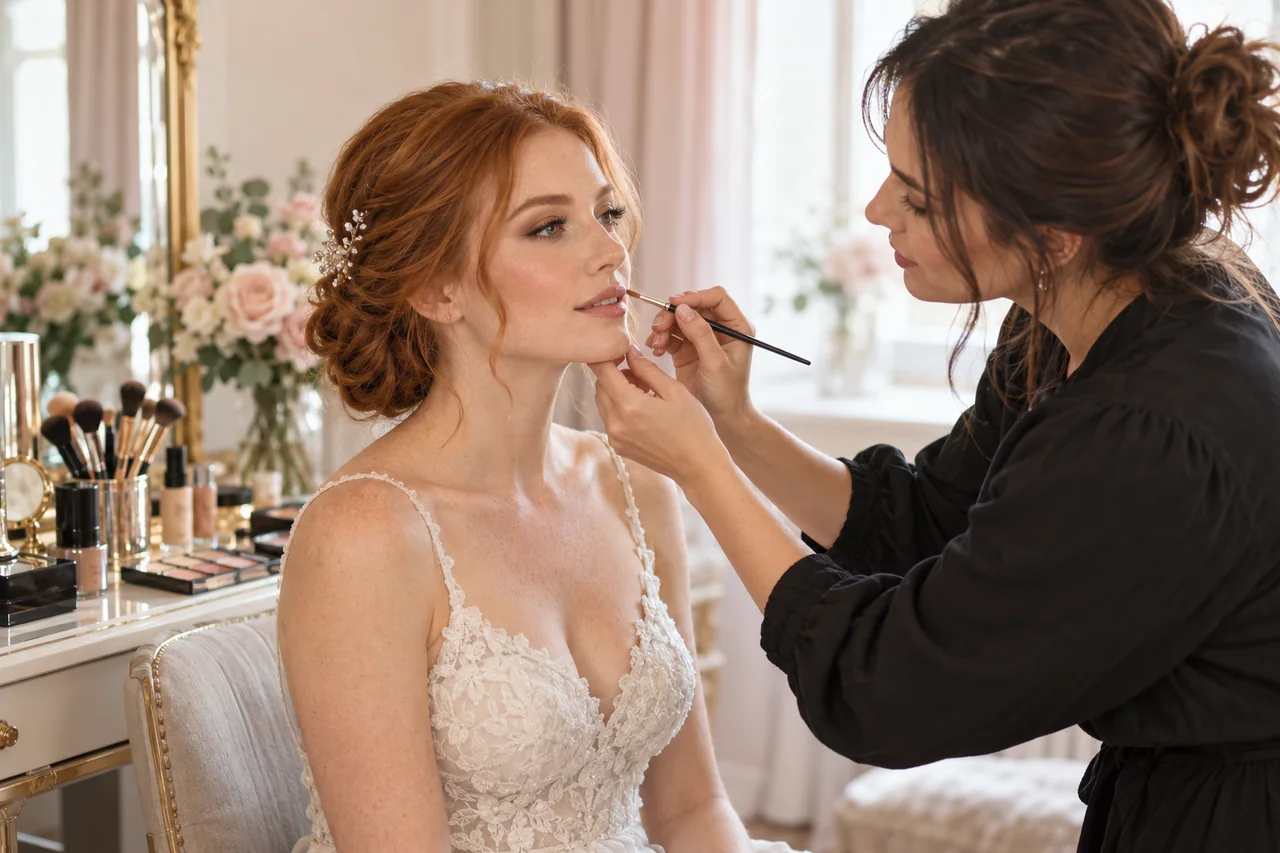
Look at the trial result immediately, then again after eating, talking and moving around. Notice texture, comfort and colour. Does the lash weight bother you? Does a matte lip feel too dry? Does a luminous finish still feel like your preference several hours later? The answers matter more than the first photograph alone.
Take unfiltered photographs near a window, outside in shade and with flash. Add a wider shot that resembles a wedding portrait rather than only close-ups. These images are useful discussion tools, though camera processing and professional lighting can produce different results. Keep your in-person impression alongside the photographs.
Give the artist specific feedback. “I like the eye shape but want less shimmer” is easier to act on than “it feels too glam.” “I want my freckles to remain visible” is clearer than “make it more natural.” Useful language prevents the trial from becoming a debate about what a style should mean.
Match maintenance to your actual habits
If you are happy checking lipstick after meals, a statement lip may be a good choice. If you know you will forget, ask to test a formula and colour that wears in a way you can tolerate. There is no product that removes all need for care, and a label such as long-wear is not a guarantee for every person.
The same applies to lashes and complexion. Do not choose unfamiliar lashes that feel distracting because an inspiration board suggests they are necessary. Ask the artist to demonstrate a small touch-up routine with the products you will carry. A kit should contain items you know how to use, not a miniature version of the entire professional setup.
Make three decisions before the second conversation
- Choose the level of coverage you like on your own face.
- Identify the feature you want to emphasise most.
- Decide how much touch-up attention you are willing to give.
Then add the practical details: ceremony time, photography, weather exposure and any sensitivities. These help the artist refine the look without changing your underlying preferences. A wedding in France can be elegant with a soft face, a bold face or something between the two; the location does not settle those decisions for you.
Three common doubts, answered
Will natural makeup disappear in photographs?
It does not have to. Placement, colour and gentle definition can make a softer look visible. Test it at portrait distance and share concerns with the artist and photographer. You do not need to wear a level of makeup you dislike simply because someone says cameras always demand it.
Does glam makeup have to hide skin texture?
No. Fuller coverage and defined features can still leave ordinary texture visible. Compare the look in real light rather than expecting an edited image’s smoothness. If the finish feels heavy, discuss product quantity and placement instead of treating texture as a failure.
What if I prefer different parts of both?
That is a useful brief. Ask for the base finish from a softer reference with the lip or eye definition from another. A good trial explores the combination on your features. Give yourself permission to describe the result in plain language rather than finding the perfect trend name.
Once the look is agreed, save the trial notes and product details. Stop adding new references unless you have a clear reason to revise the plan. The best choice is the one you can wear with confidence throughout the day, including the moments when you are no longer thinking about makeup at all.