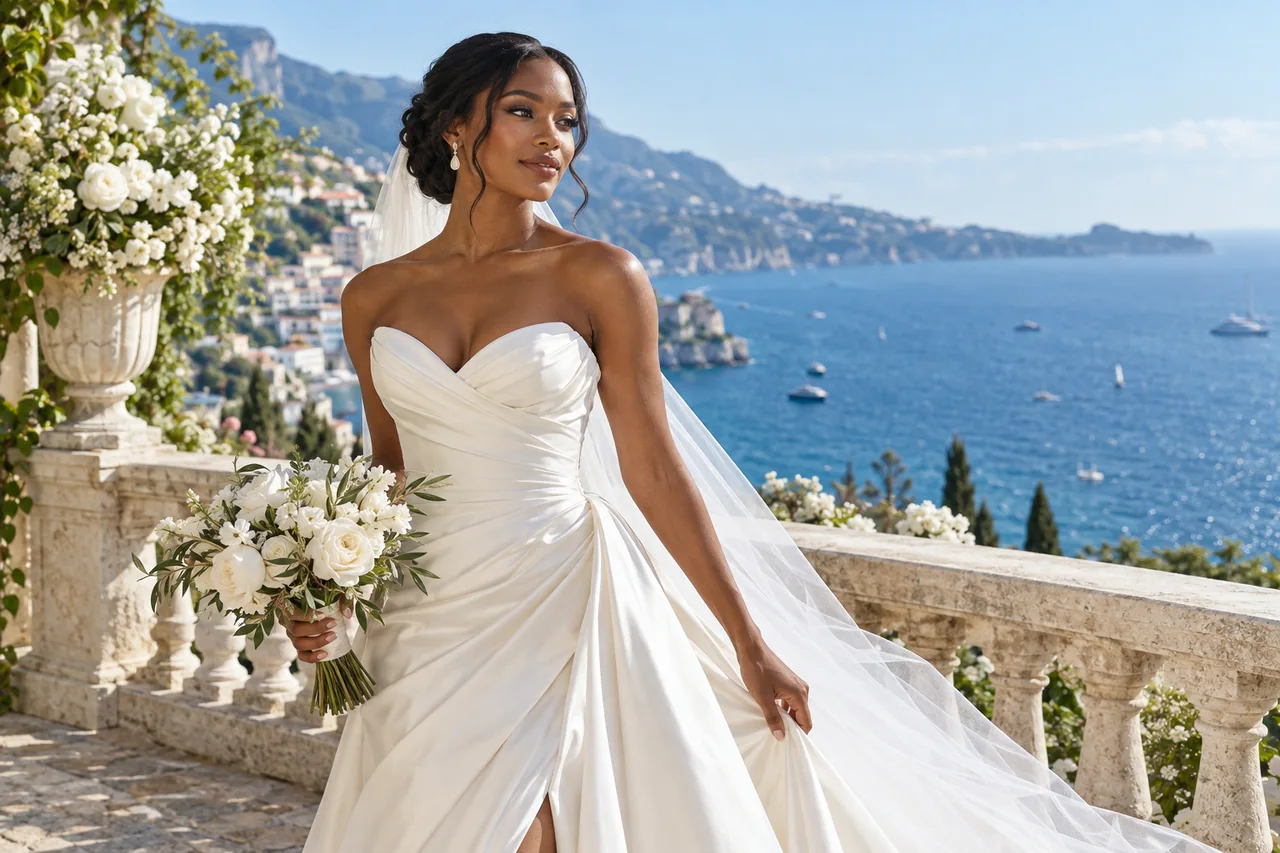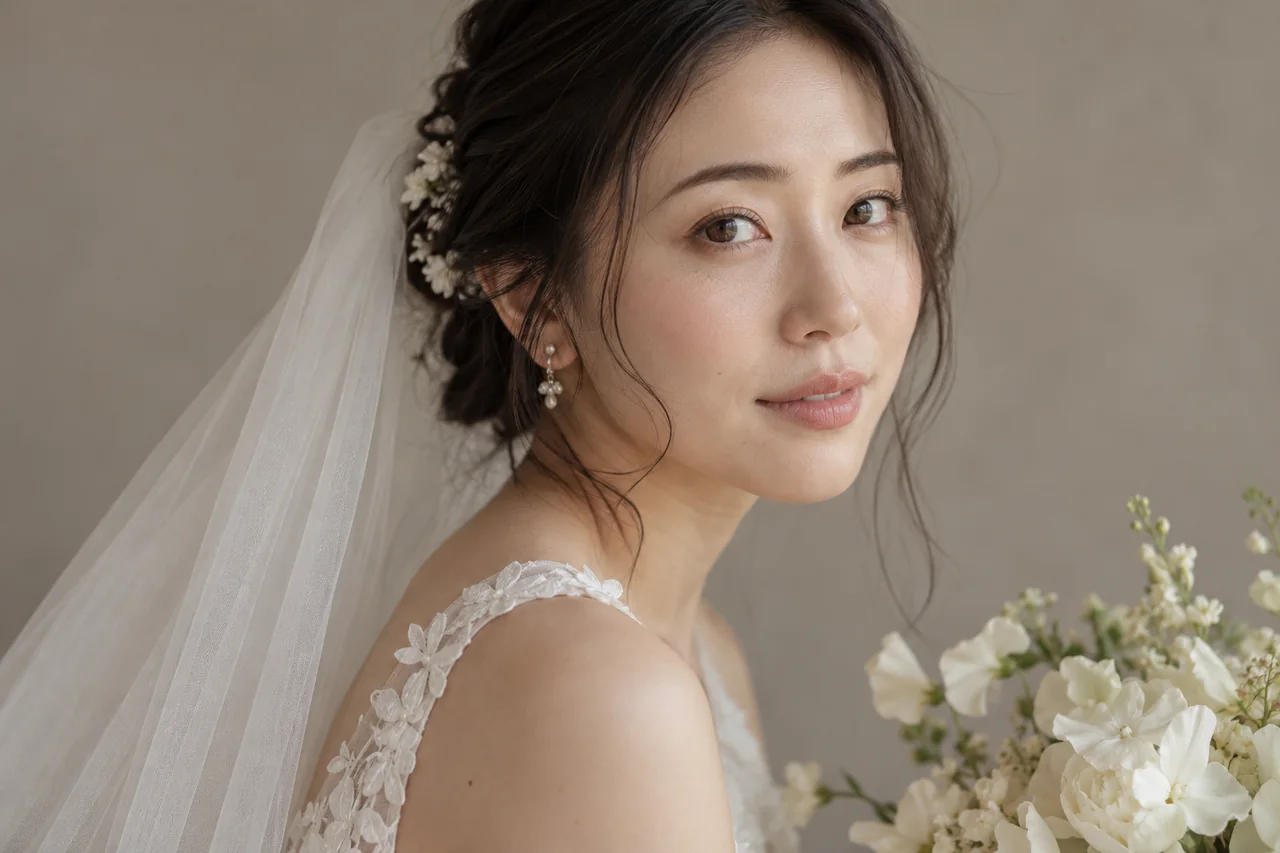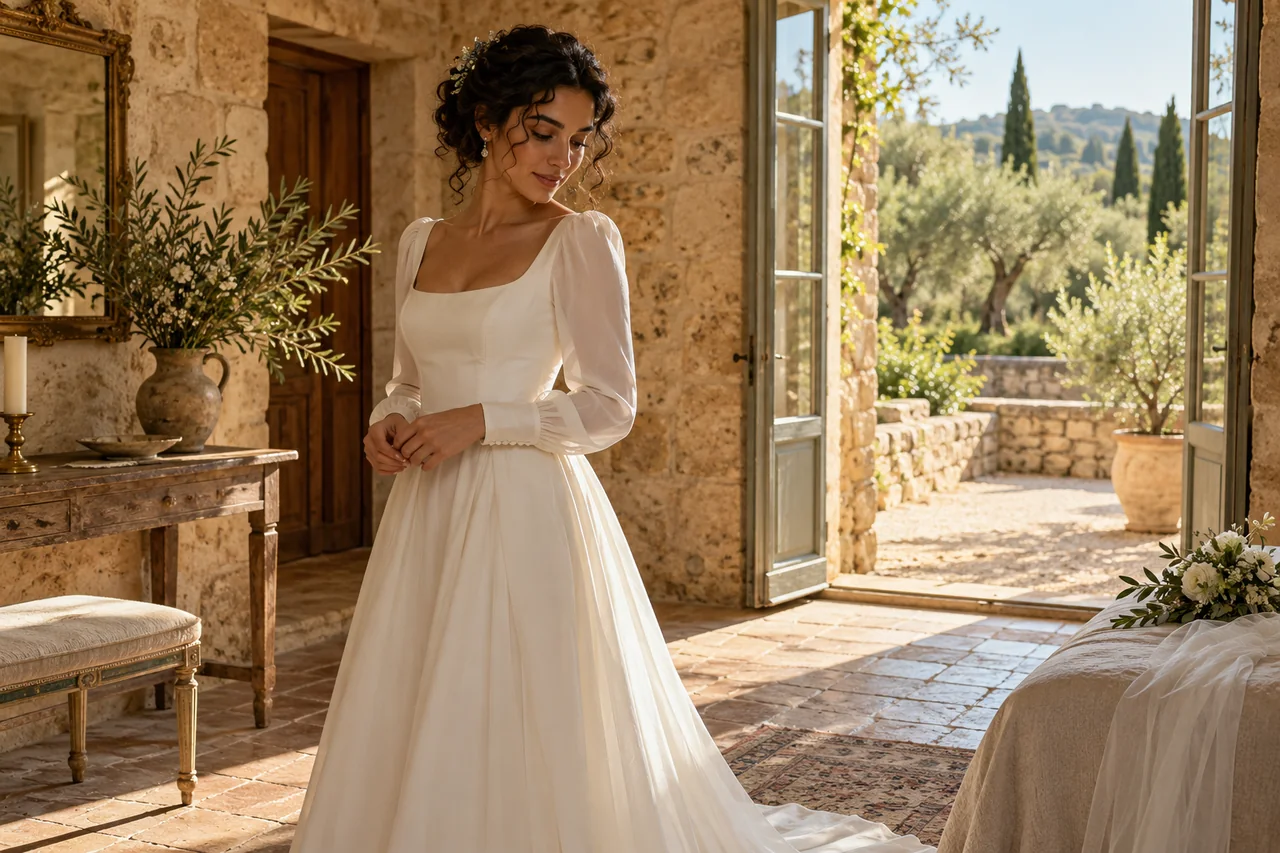
A summer wedding in Provence often invites an outdoor plan, but bridal makeup should follow the actual venue and ceremony time rather than an imagined lavender-field scene. Find out where you will sit for preparation, how long you expect to be outside and whether a shaded alternative exists. Your best starting point is a tested look, a comfortable room and a schedule that does not leave you waiting in the sun.
Map the day’s exposure
Divide the timetable into getting ready, travel, ceremony, portraits and dinner. Mark which parts are indoors, shaded or exposed. A late ceremony with indoor preparation may need a different touch-up plan from a midday event in a courtyard. Ask the venue to describe the space at your scheduled time, not simply send a photograph taken in another season.
A stone building is not automatically a cool getting-ready room. Check ventilation, power outlets, the distance from the room to the ceremony and how many people will share it. A room crowded with relatives, garment bags and hot styling tools can become uncomfortable. Keep the artist’s work area clear and agree where everyone else will prepare.
If the schedule includes garden portraits before the ceremony, discuss a quick complexion check immediately afterwards. That small pause can be more useful than adding layers of product at the start. Write it into the timetable so it does not depend on someone remembering when the morning becomes busy.
Choose the finish by your skin and preferences
A satin finish can offer a middle ground between a very matte base and a deliberately glossy look. Still, the right finish depends on your face and preferences. If you usually dislike the feel of foundation, ask for targeted coverage and test a lighter approach. If you feel more confident with fuller coverage, test that without apologising for it.
For oil-prone areas, ask the artist where powder belongs and how to refresh those areas later. For dry areas, piling on powder may emphasise texture rather than solve wear. A trial is the place to discover which parts of the routine need a different product, quantity or application technique.
Match the base to the skin you have at the trial, then discuss what to do if your colour changes before the wedding. Do not deliberately tan to match an inspiration photograph. If you use a self-tanning product, test it early and tell the artist about it; the neckline and shoulders may need a different matching conversation.
Treat sun protection as a separate job
Makeup longevity and sun protection are different concerns. Follow a tested sunscreen routine rather than depending on a small amount of SPF-labelled foundation. The AAD’s sun protection advice recommends broad-spectrum, water-resistant sunscreen with SPF 30 or higher, together with shade and protective clothing.
Discuss reapplication with your artist before the wedding, especially if you expect extended outdoor time. No makeup technique makes a sunscreen last indefinitely. Build shade and indoor breaks into the plan, and do not assume a decorative parasol replaces the protection your skin needs. Read the product directions and ask a clinician about individual concerns.
Keep your tested sunscreen with the supplies someone will carry. If a new formula separates under makeup, resolve that during preparation rather than abandoning protection on the morning. Test the complete combination under conditions reasonably similar to the wedding day, including your moisturiser and any primer.
Coordinate hair, veil and neckline
Bring photographs of the hairstyle and the dress neckline to the makeup trial. Loose hair moving across lip gloss can be irritating during breezy portraits. A more defined eye might balance a hairstyle that frames the face, while a statement lip may feel right with hair worn away from it. These are choices to test, not rules.
Try the veil placement before the wedding morning if possible. Ask how it will be attached and removed without disturbing hair or catching earrings. Makeup and hair appointments should have a shared plan for the final check, so the bride is not moved between chairs while a veil, dress and lipstick are all being adjusted.
Consider the time spent wearing the complete look. An attractive photograph says little about a hairstyle that feels tight or lashes that feel heavy after several hours. Tell the professionals how you want to feel during dinner and dancing, as well as how you want to look in portraits.
Build a rural venue arrival plan
A countryside venue may have different entrances for suppliers and guests. Ask for the precise artist arrival instructions, parking location, unloading arrangement and a contact who will answer on the morning. Confirm these directly with the venue. Do not infer them from a map pin or an image of the château entrance.
For guests travelling through airports or larger attractions around the wedding, practical parking and arrival guides can provide background ideas. They are not a substitute for your wedding venue’s own access instructions, and coverage of a particular French property should never be assumed. Put the confirmed address and transport arrangements in your guest information.
Travel costs and early starts should appear in the artist’s quote. If the artist is coming from another town, agree when access to the getting-ready room begins. A beautiful room that remains locked until late in the morning can undo an otherwise sensible beauty schedule.
Choose a touch-up plan you can actually use
Pack blotting paper, tissues, your tested lip colour and a small mirror. Ask the artist whether a little powder or concealer would be useful for your face. Give the pouch to a named person and arrange a quiet moment before dinner, rather than expecting to stop continually throughout the celebration.
Press rather than drag when removing surface shine. Refresh lip colour after checking the edges in a mirror. If makeup has separated, repeatedly adding powder may make the texture more obvious; use the method demonstrated at your trial. Keep hands and applicators clean, and do not share lip products directly between guests.
Photographs may show a little natural shine, and that is not automatically a flaw. Decide what you actually want to correct. The purpose of the kit is to support comfort and confidence, not create a new task every time someone takes a picture.
A venue-specific preparation checklist
- Ask about shade at the ceremony time and a weather backup.
- Confirm ventilation, lighting and access to the getting-ready room.
- Share the portrait schedule with the makeup artist.
- Test skincare, sunscreen and makeup together.
- Confirm travel, parking and supplier contact details directly.
- Assign the touch-up pouch to one person.
- Keep the final beauty check before dressing and departure.
The official France.fr introduction to Provence offers destination context, but it cannot describe the conditions at your chosen venue. Use regional inspiration to shape the celebration, then make decisions from the property, season and timetable you have actually booked.
If the day turns out cooler or wetter
Keep the same tested core look unless there is a clear reason to change it. Shift the portrait plan, protect the dress during travel and move preparation to the best available light. Your artist can make small adjustments based on the conditions. A last-minute switch to unfamiliar products introduces uncertainty when the schedule has little room for troubleshooting.
A successful summer beauty plan leaves you free to enjoy the setting. Book a look you recognise, rehearse the practical details and let the landscape provide the atmosphere. Provence does not require a particular shade of blush, a particular hair colour or an elaborate routine to make the day feel personal.